Wednesday, 10 June 2015

Observing the Five Elements


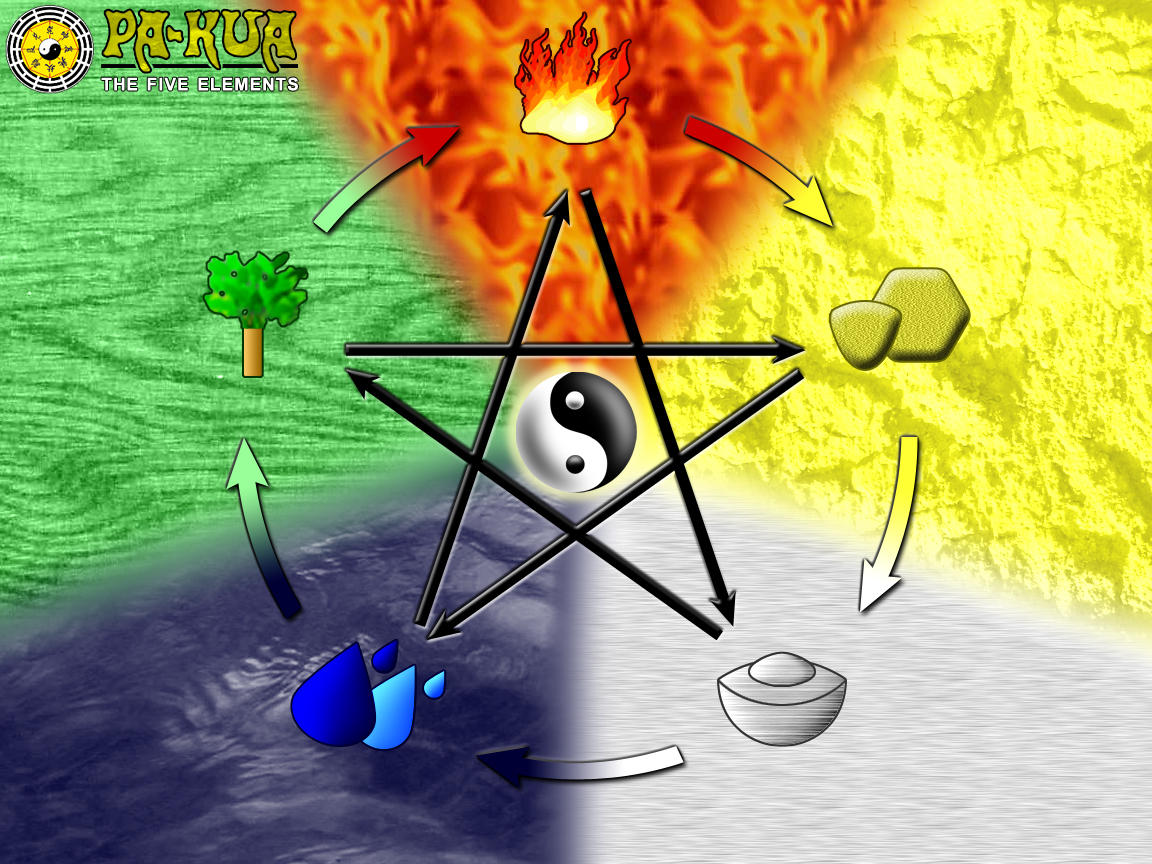
The ancient, classical Chinese acupuncturists believed that a unique combination of five distinct elements constitutes an individual's make up, namely Fire, Earth, Metal, Water and Wood.

Each element brings certain virtues, strengths and weaknesses to the person's character. Through a combination of nature and nurture, each of us develops a special relationship with one particular element, known as the Guardian Element.

It is nature of the Guardian Element which determines how we conduct ourselves in our day to day life, how we interact with others and how we react in certain situations. It is also the Guardian Element which literally gets knocked for six when life throws its traumas at us, throwing the element and ourselves out of balance energetically, leaving us feeling physically and often emotionally unwell.

The key aspect of Five Element Acupuncture is that treatment is directed specifically at the patient's ailing Guardian Element rather than at any specific symptom, ie it tackles cause rather than effect.

So how then do we determine a patient's Guardian Element?

This happens usually by means of close questioning and careful observation during the initial consultation with the patient.

This careful observation takes years of practice to perfect - as a practitioner I am constantly looking, listening, feeling and sensing clues which will direct me towards the patient's Guardian Element. Generally, the more out of balance the patient, the easier it is to fix upon the Guardian Element - in fact, it is as if it is shouting at me for help! So my discipline is to quieten my mind and to pay heed to all of my senses.

I find that social occasions are the perfect training ground for me and I often find myself 'people watching' - observing, noticing and assessing, and trying to pin down those elusive Guardian Elements.

At a family BBQ recently I watched my loved ones with mild amusement as I noted their conduct and reactions as we were all mucking in to prepare the food.

Number 1 offspring wanted to make a specific recipe and rushed out to not one but two supermarkets to get exactly the right ingredients - action, little flexibility = Wood.

If it was left up to me, I would have looked in the cupboards, changed the recipe and made something with what was already there - resourceful = Earth

Number 2 offspring went to Waitrose and only bought upmarket, branded goods - quality = Metal

Number 3 offspring went round chatting to everyone, making sure they were all OK and had drinks - communication, hospitality, entertainer = Fire

Number 4 offspring went back for second and third helpings and was starving again after a couple of hours, whilst also keeping a careful watch on the little ones - caring, nurturing, providing (especially food) = Earth

Husband controlled the BBQ (very expertly, too - nobody else gets a look in!) loved having everyone around and played with the little ones - leadership, comradeship, inner child = Wood.

We can learn so much by saying less and seeing more!


Monday, 27 April 2015

Just Because We're Therapists Doesn't Mean to Say We're Sorted


“As practitioners we offer our patients guidance, support and encouragement - it seems a good idea to offer it to ourselves” Isobel Cosgrove, Acupuncturist, BAcC Member and Supervision Trainer


I have never felt so alone as I did the day I finished my training and qualified as an Acupuncturist. As I set out on my career, working in solo, I no longer had my tutors at hand for mentoring nor my peers to bounce ideas off or to share uncertainties with. All I had were my own two feet - and a short amount of time to learn to stand on them.

Back then, patients were few and far between - and why should I assume it would be any different? I'd been qualified for all of five minutes so how could I possibly expect to have a queue outside my treatment room door from day one? 

Any seasoned businessman will tell you that if you can survive the first three years of any new start up, then chances are you're on to a winner. However, that time can be filled with confidence wobbles, fear of failure, escalating outgoings and a pittance for an income - tough times indeed. And because we're therapists, people seem to assume that we're able to cope far better than most because we've got a handle on everything, we don't get stressed or anxious and  - because we're 'sorted', right?

Not right! Yes, we're therapists - but we're also human. We too get it wrong sometimes, lack confidence and can struggle as much as the next person. But I have found there to be in some therapists a reluctance to ask for help, either because of arrogance, fear of appearing to lack skill or knowledge, or an unwillingness to continue their personal and professional development.

As therapists, we owe it to ourselves as well as to our patients to look after ourselves properly (if we don't do it, who will?), to further our knowledge and hone our skills, to be able to receive as well as to give and above all to maintain a sense of humility. After all, to be invited by our patients to join them on their journey of self-discovery and self-healing is indeed a privilege. We ourselves are not the healers - our job is to facilitate, to open doors so that our patients can consider the options available to them in their own time; ours is not to lead the way but to stand just behind in order to offer a steadying hand if and when necessary.

As an Acupuncture therapist, I practice what I preach. I do look after myself - very well actually, but this hasn't always been the case (I learned my lesson the hard way!). I ring fence several hours in every week and set these aside as 'Me Time' - yoga, pilates, massage, my own acupuncture treatment, reading and most importantly, supervision and mentoring. www.mentoringsupervision.org

However, in my efforts to take better care of myself I have encountered a number of therapists offering different treatments, several of whom I have had issues with of some kind or another. I admit that many of the issues were my own, but there were definitely some which were down to bad practice and people skills on the therapist's part. These were people who I assumed, or at least hoped were 'sorted' - in reality, some of them would have really benefited from working on themselves before working with their patients. 

Tuesday, 10 March 2015

Taking the Stress out of Dealing with Stress


BBC news this week contained the worrying report on mental health charity MIND's recent online survey of emergency services personnel which found that 87% of respondents had experienced stress, low mood or poor mental health at some point whilst working within the emergency services.

A further worrying fact was that despite this greater prevalence of poor mental health, only 47% had admitted to taking any time off due to ill health. This suggests that emergency workers find it harder than other professions to say when they are not at their best, but they carry on regardless.

Whether this is down to embarrassment or an unfailing sense of duty, this line of thinking is not helpful - neither to the professional nor to the people they are trying to help as everybody here is getting the thin end of the wedge.

We've all heard the saying "Healer, heal thyself". How true is this.

It is only when we look after ourselves that we can look after others to the best of our ability. Anybody who is running on empty are doing just that - running - out of steam and helping no-one, least of all themselves. In fact, they are running towards burnout and a very long time off sick, and an even longer period of recovery.

MIND has initiated Blue Light Time to Change, a government-backed pledge for front-line mental health support for emergency personnel. And not a moment too soon.

If this pledge kicks off, then it will be a great start in the process. But even better would be pro-action rather than reaction. All people in caring  professions or emergency roles would benefit greatly from receiving regular non-judgemental support, allowing time and space for reflection and exploration of issues associated with their working practice.

But what if, as in the case of Post Traumatic Stress Disorder (PTSD) the stress is so severe or the memories and flashbacks are too painful to revisit through talking therapy? Five Element Acupuncture is the answer - the needles will do all the work if the thought of talking is just too overwhelming or frightening, and can be carried out with the minimum of patient/practitioner interaction if so desired.

Jo Banthorpe practices Five Element Acupuncture in Ipswich and is also a trained Supervisor and Mentor, offering support to those working in therapeutic, medical and caring professions and especially to those working in isolation.

Monday, 23 February 2015

What Can Acupuncture Do For Me?


Many people would only think of turning to acupuncture for pain relief and indeed, it can be very effective both in the short and long term. Often, but not always, the number of treatments required will depend on the duration of symptoms.

But apart from alleviating joint and back pain, what else can acupuncture be helpful in treating?

The emphasis of Five Element Acupuncture is on treating people rather than symptoms and in so saying, I will happily stick my neck out and say that acupuncture can be useful in treating ANY condition and absolutely EVERYBODY, without fail, would benefit from having some treatment. 

The key is however, to have a realistic outcome in mind. In some cases, a complete cure or cessation of symptoms will never be possible in which case the intention of treatment will center more around management and of the condition and the movement towards acceptance of the current reality.

Symptoms and pain arise as a consequence of our energy being thrown out of balance as a direct result of the traumas which life has dealt us. Whilst we may be able to function adequately in this state of imbalance, the body exists in a state of duress and is often unable to self-heal.

Five Element Acupuncture can help with the management of physical symptoms and medical conditions as well as enabling reconciliation of emotional issues and an increase in self-awareness. Most importantly, it allows the individual some invaluable 'me' time for reflection, replenishment and relaxation - something that each and every one of us could do with on a regular basis.

Wednesday, 4 February 2015

What Exactly is Five Element Acupuncture?


Five Element Acupuncture, also known as Classical Acupuncture, is quite distinct from the more widely practiced Traditional Chinese Medicine (TCM). Although the Classical method of healing originated in China over 2000 years ago it was almost lost in the 20th century in favour of TCM, but thankfully is now seeing a resurgence.

So what then is the key difference between TCM and Five Element Acupuncture?

Contrary to its name, TCM is not as traditional as it sounds - it is a Westernised and standardised version of Classical Acupuncture, and is concerned with treating specific symptoms and syndromes with a specific combination of needles.

Five Element Acupuncture on the other hand, is a very ancient system of healing based on the early classical texts and beliefs from its Chinese origins. Its emphasis is on treating people rather than their symptoms, and as each person is an individual then no two people are treated in exactly the same way, even if they present with similar medical conditions.

These different schools of thoughts can be likened to the difference between using PC or Mac, or to cooking with electricity or gas - the desired outcome is similar, but the operating systems are not the same.

The ancient Chinese believed that a unique combination of five distinct elements (namely fire, earth, metal, water, wood) constitutes an individual's make up. Each element brings certain virtues, strengths and weaknesses to the person's character. Through a combination of nature and nurture, each of us develops a special relationship with one particular element, known as the Guardian Element, and this lends an emphasis to the way in which we conduct ourselves and our interaction with others.

It is the Guardian Element which bears the brunt of the majority of our life's stresses and becomes out of balance, showing its distress by allowing symptoms and pain to arise. Each element shows certain characteristics when in a well-balanced state, and inappropriate or extreme characteristics whilst imbalanced.

My role as a Five Element Acupuncturist is to determine the patient's Guardian Element by way of in-depth questioning and very close observation. Treatment is then tailored specifically with the intention of reinforcing the Element, so that a better emotional and physical balance can be reinstated, gradually enabling symptoms and pain to subside.

Five Element Acupuncture advocates the use of as few needles as possible in any one treatment. This is because each needle carries a distinct message and the body can easily be overwhelmed, particularly in early stages of treatment.

For further information regarding treatment, please visit www.jobanthorpe.co.uk


Monday, 15 December 2014

Are We Becoming a Chronically Ill Society?


The BBC last week that one of the most comprehensive health studies conducted recently found that over 50% of women regularly take 3 or more prescribed medications (43% of men). 5% of all prescriptions are for antidepressants, taken by 1 in 10 women and 1 in 20 men.

Cholesterol-lowering statins, pain relief and antidepressants were most commonly prescribed, and with an average of 18.7 prescriptions were issued per person, the total cost to the NHS was in excess of £15bn.

So there begs the question - are the nation's medics getting better at diagnosing illness?
Or rather - are we becoming a chronically ill society?

One wonders how much of this is down to people ignoring their body's warning signs and pushing themselves to the limit by working harder, faster and longer.

As a nation, our approach to our health tends to be reactive rather than proactive - we are more likely to seek medical help only when it is necessary, often by which time it is too late - we're possibly in need of medication and are already on the slippery slope to a lengthy period of recovery.

Taking responsibility for ourselves and adopting a proactive approach to healthcare means that looking after our own health and well being becomes a priority. Being more aware and listening to our bodies ensures that potential ailments can be nipped in the bud, or better still, we can choose to ease off sufficiently and allow ourselves time to recover and replenish before any signs of symptoms or illness arise.

But best of all would be to adopt a health maintenance regime in order to look after ourselves when we are in good health and to make sure we stay that way.  Whilst a healthy diet, regular exercise, taking regular breaks at work and having sufficient sleep will all help, these can be difficult to sustain at times. Far simpler would be to have monthly or seasonal acupuncture maintenance treatments - this will serve you very well and keep you on the right track health wise.

'If I am not for myself, who will be for me?
If I am only for myself, who am I?
If not now, when?'                    Hillel, 12th Century

One for the New Year's Resolutions list?


Tuesday, 18 November 2014

Confused by the Weather? You're Not the Only One ...


My garden doesn't seem to know what season it is at the moment!

My Japanese Maple has been in its full autumn glory for a couple of weeks now, but its not-so-distant cousin gave up the ghost about a month back and is absolutely starkers! Big brother, on the other hand, has hardly shed a leaf and is as green and lush as it was in the Springtime. 

I have winter-flowering cyclamen happily nodding their heads alongside pelargoniums and fuchsias, still going strong after having flowered all summer long. There are even primroses in full bloom, with daffodils and grape hyacinths promising a splash of colour this side of Christmas.

Mother Nature is sending us mixed messages too. The lack of daylight is telling our bodies that it's time to hurry indoors, to close the curtains and snuggle down in preparation for the cold nights ahead. But we've barely had a frost as yet, and the midday sunshine is enticing us outdoors without a coat. 

If our bodies haven't worked out what season it is then it's no wonder that so many of my patients tell me that they are really struggling with seasonal change at the moment. Having been buoyed for so long by the glorious summer, it seems that the number of daylight hours has decreased far faster than the temperature has outside, and as a result many people's energies have plummeted.  

If any of this is resonating with you, then this is the ideal time for a Five Element Acupuncture seasonal treatment - to address any imbalance in energy, and to fortify you for whatever time ahead may bring.

Treatments for general well being offer an opportunity for reflection, replenishment and relaxation, and some well-deserved 'Me Time'.

I always recommend that patients adopt a proactive approach to their well being rather than a reactive one - if we only seek treatment for illness and pain then we've already left it too long. 

It is vitally important that we take responsibility for looking after ourselves and our health - because if we don't do it,  then nobody will do it for us.